
Beskrivelse

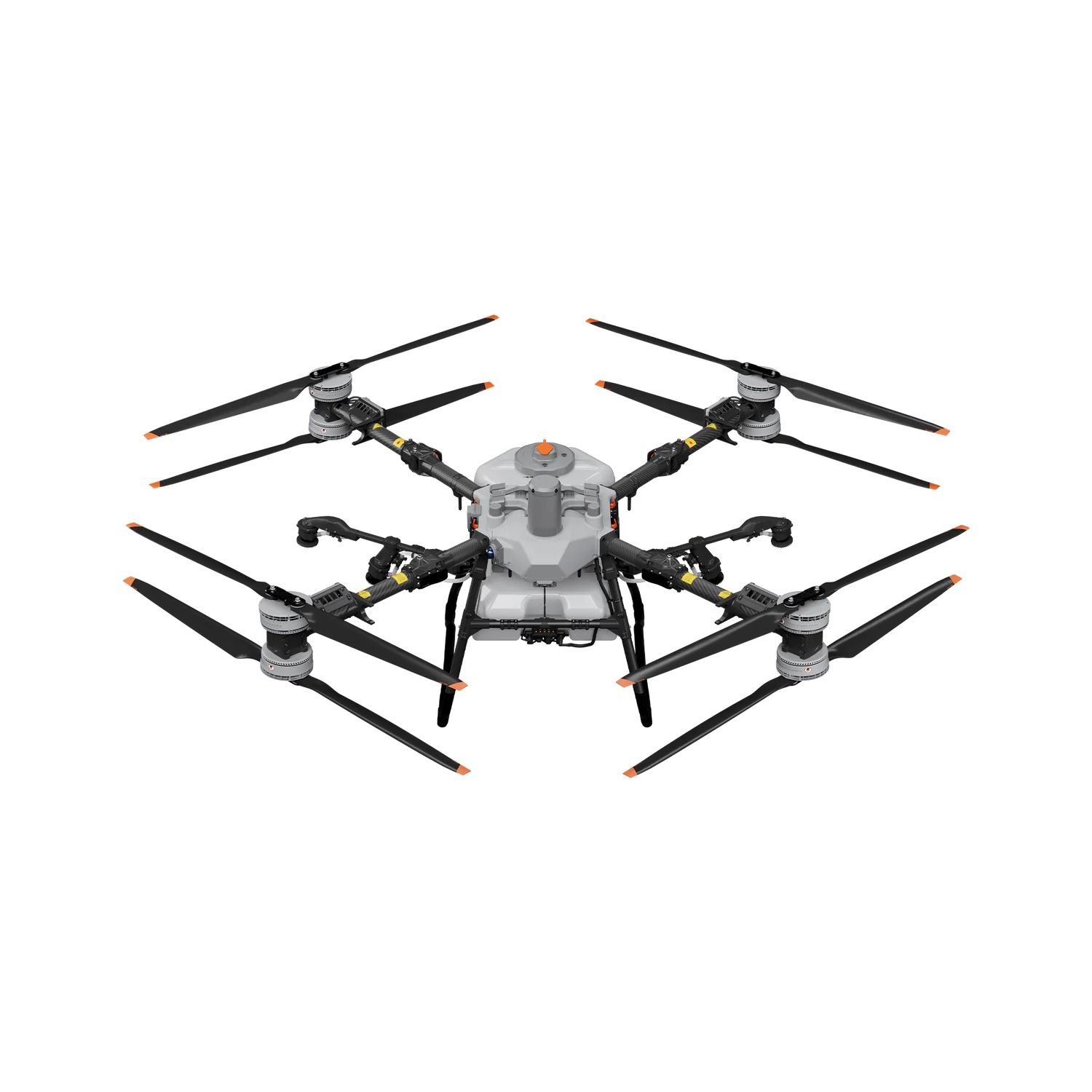
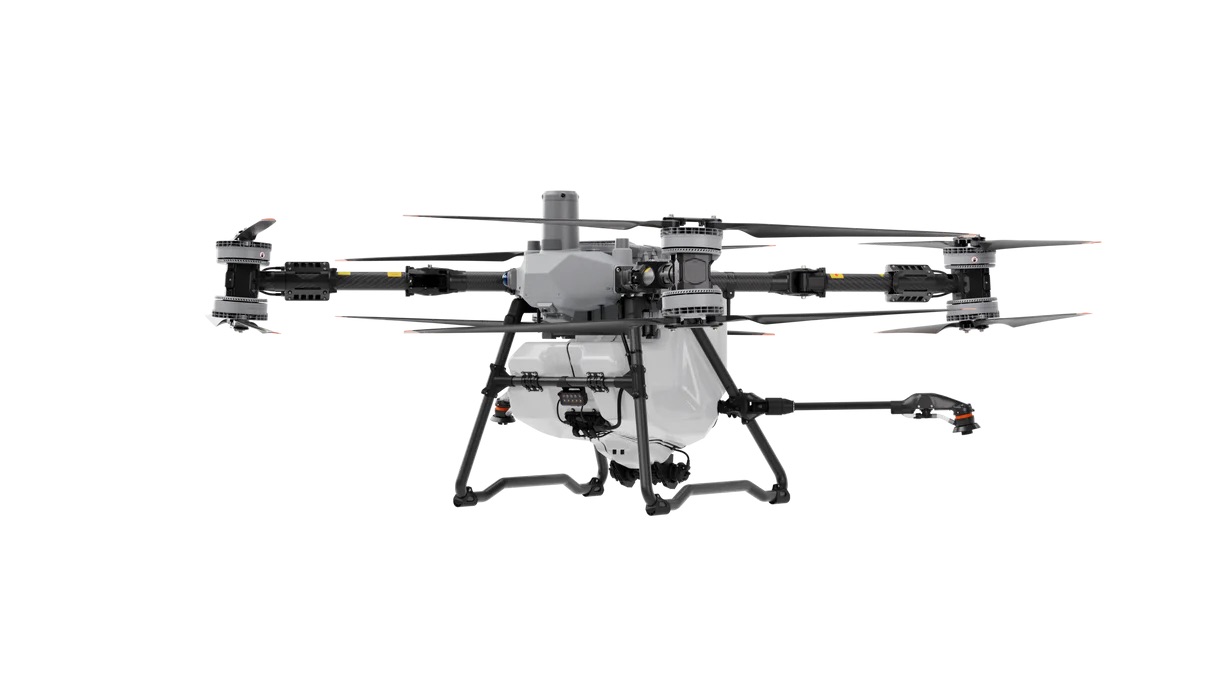
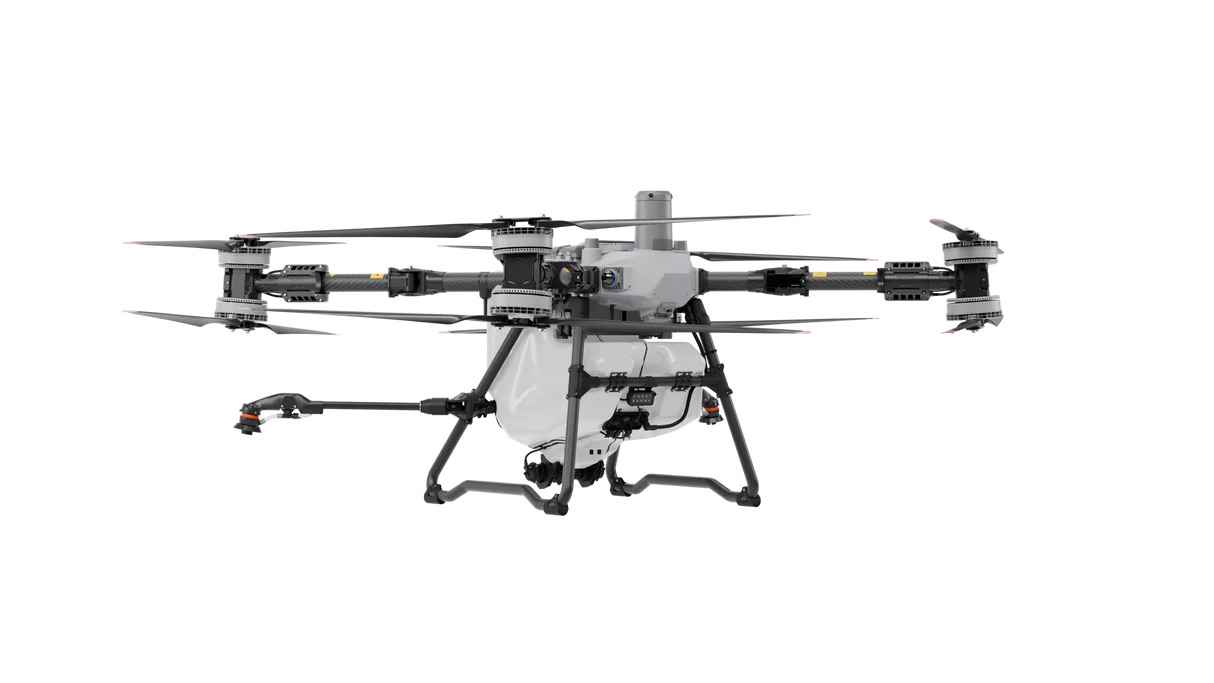
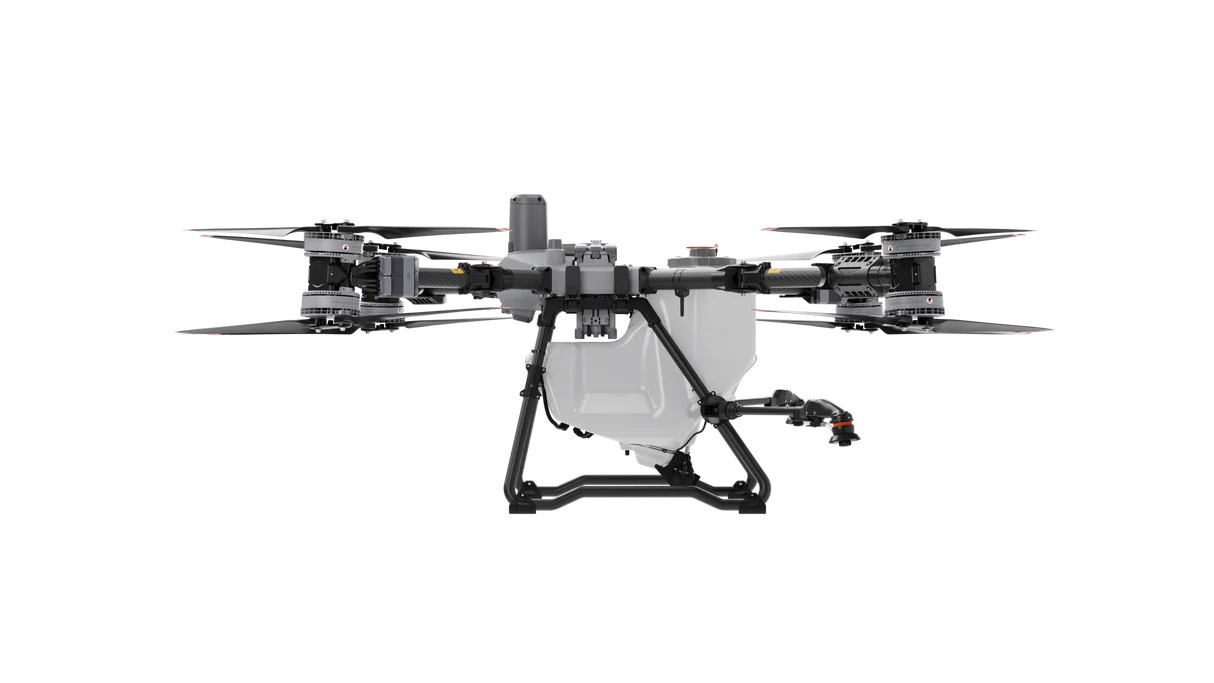
DJI AGRAS 100
Big Drone, Big Jobs.
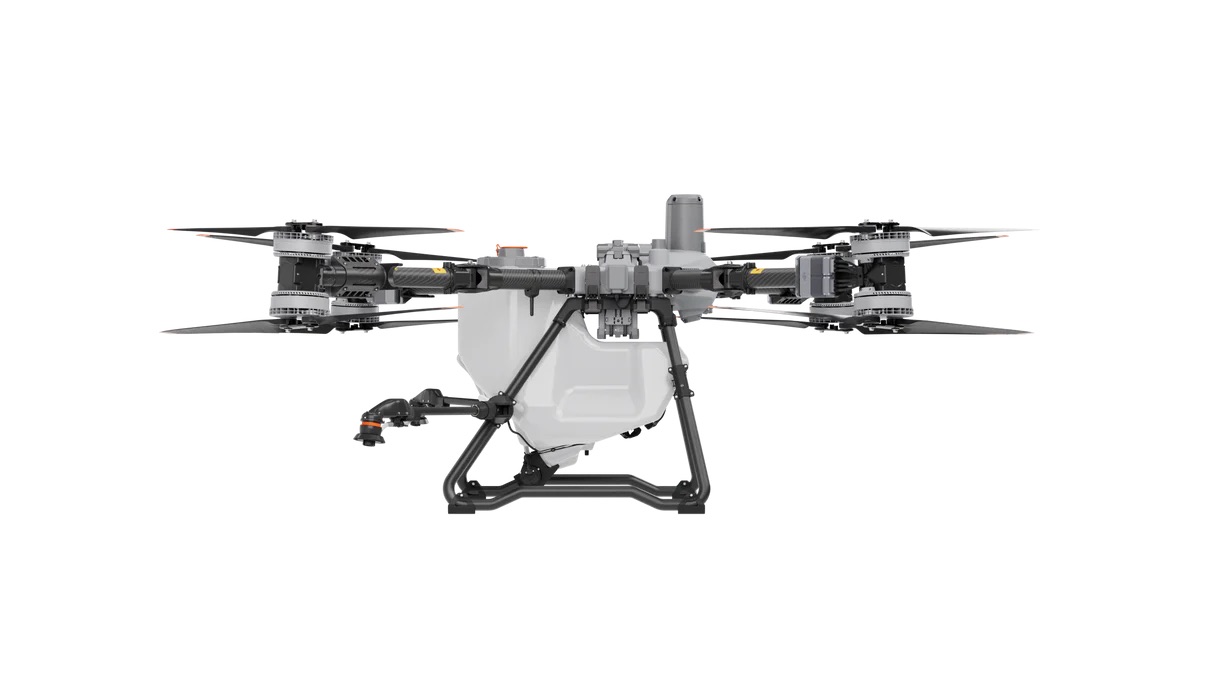
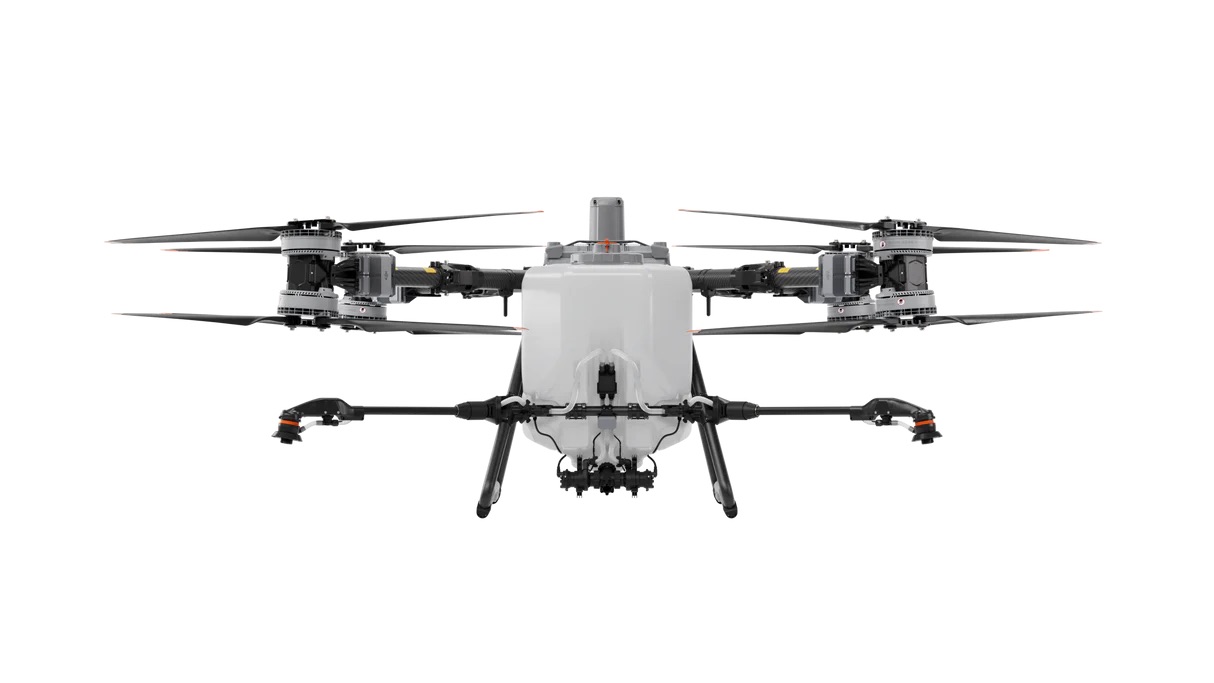
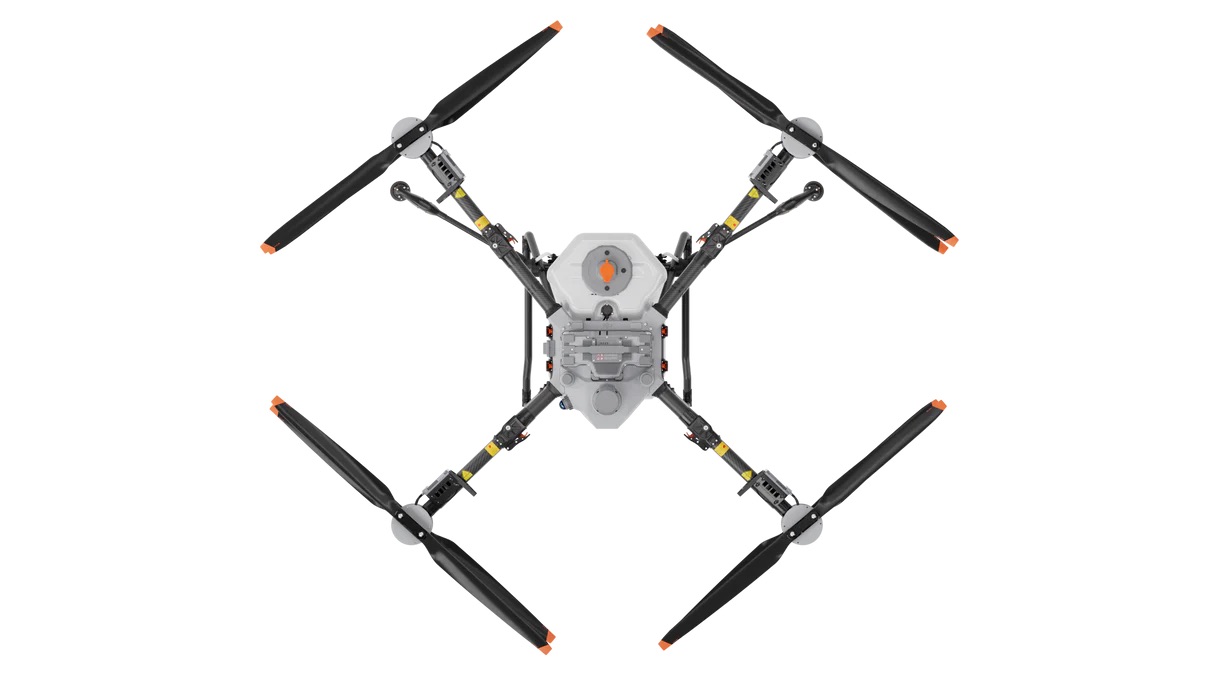
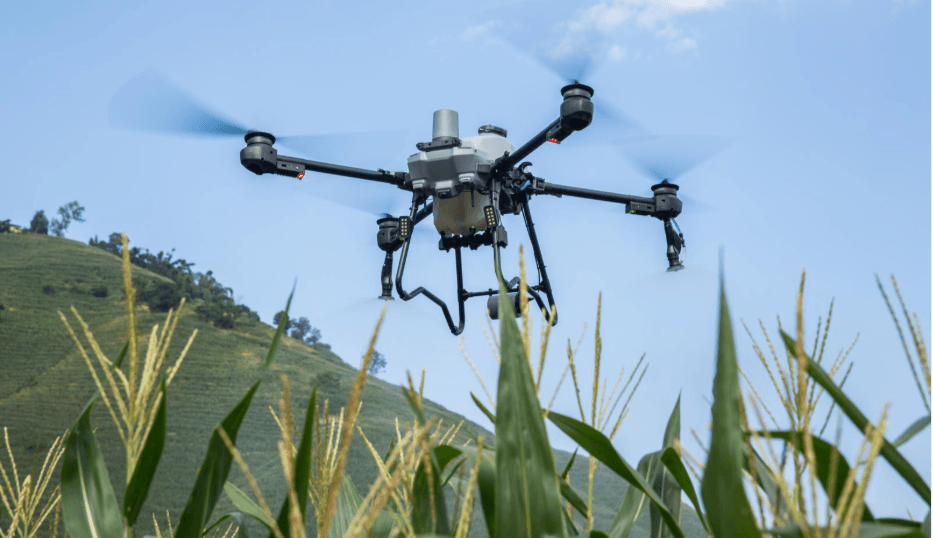
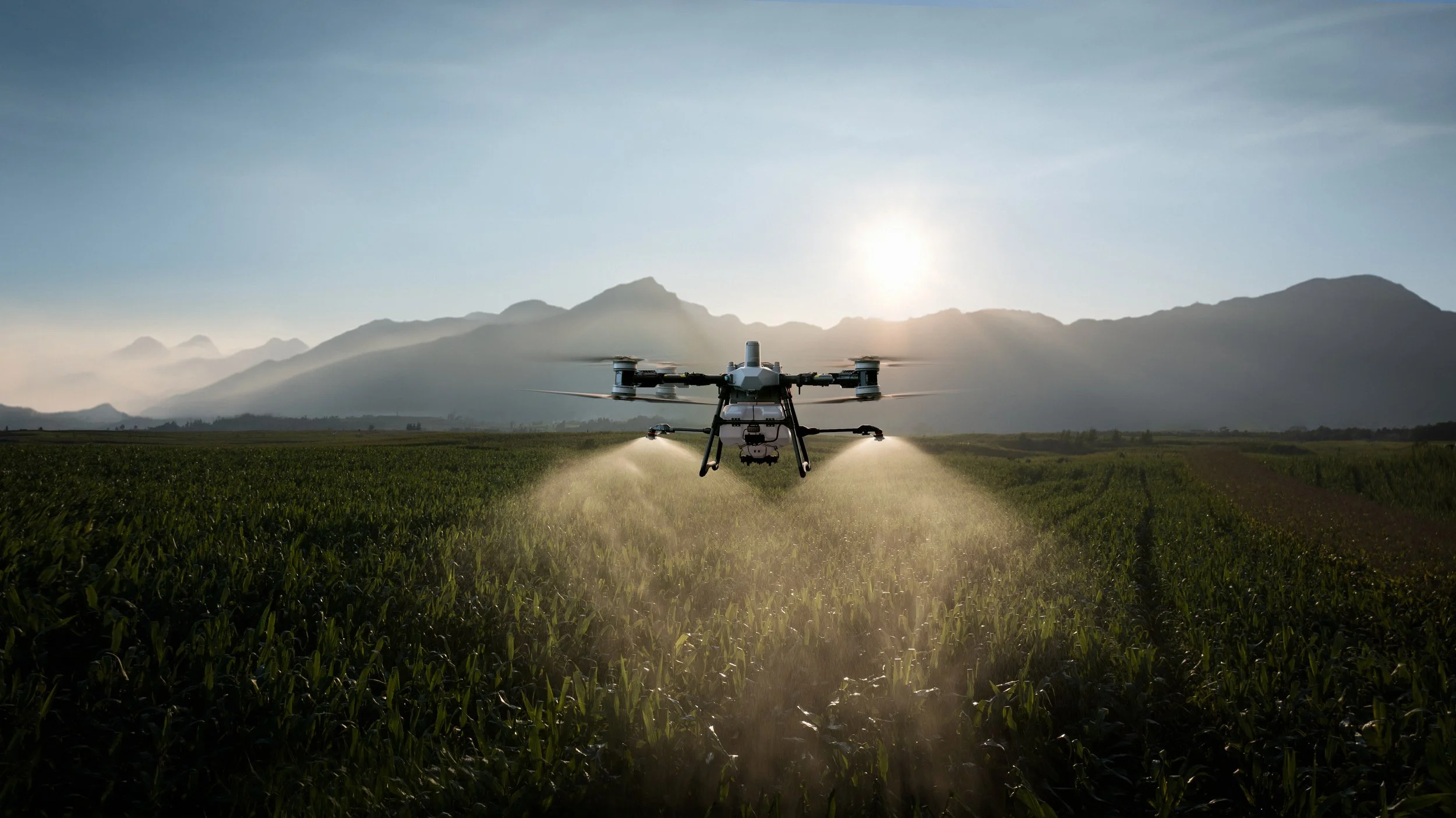
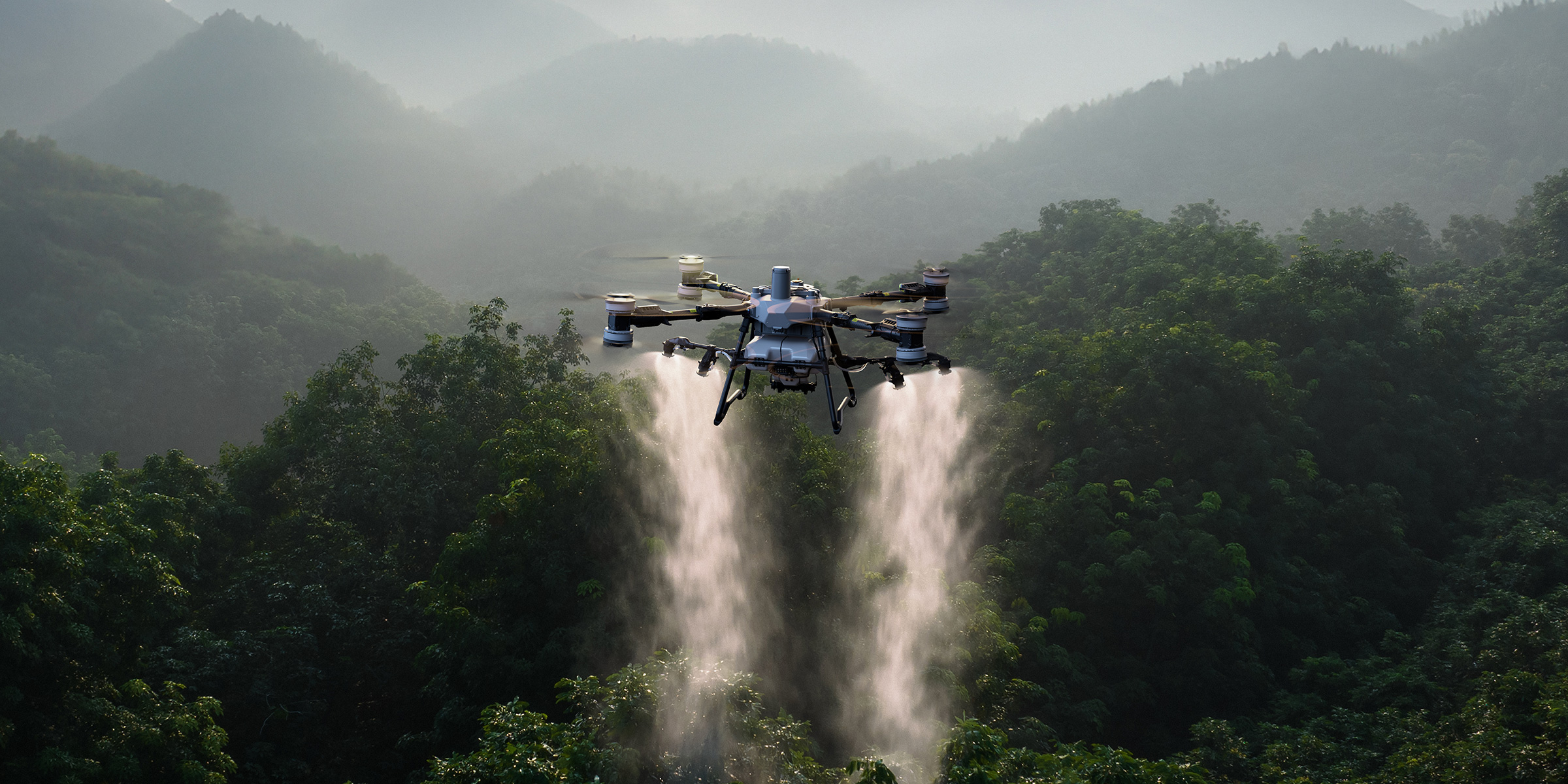
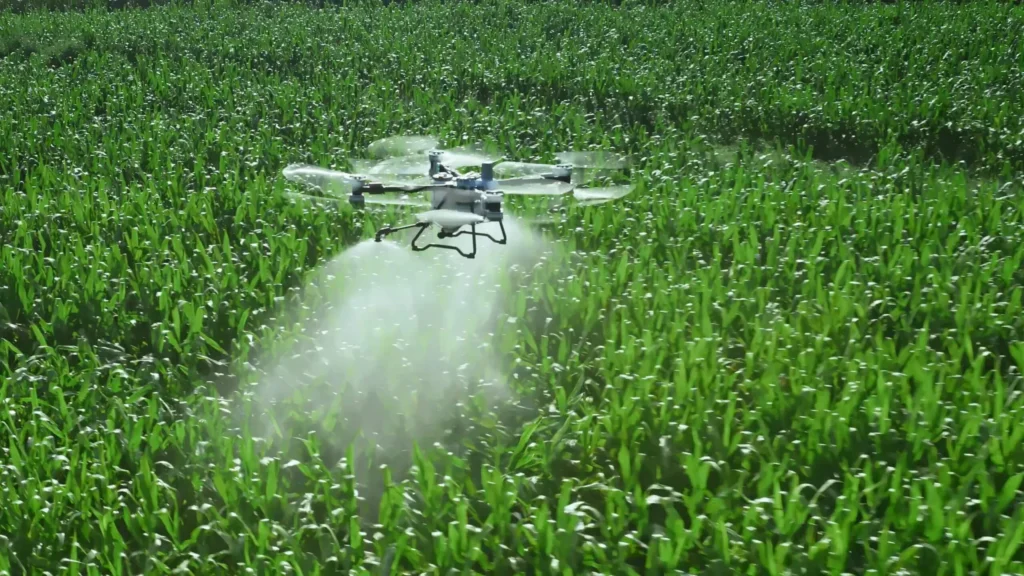
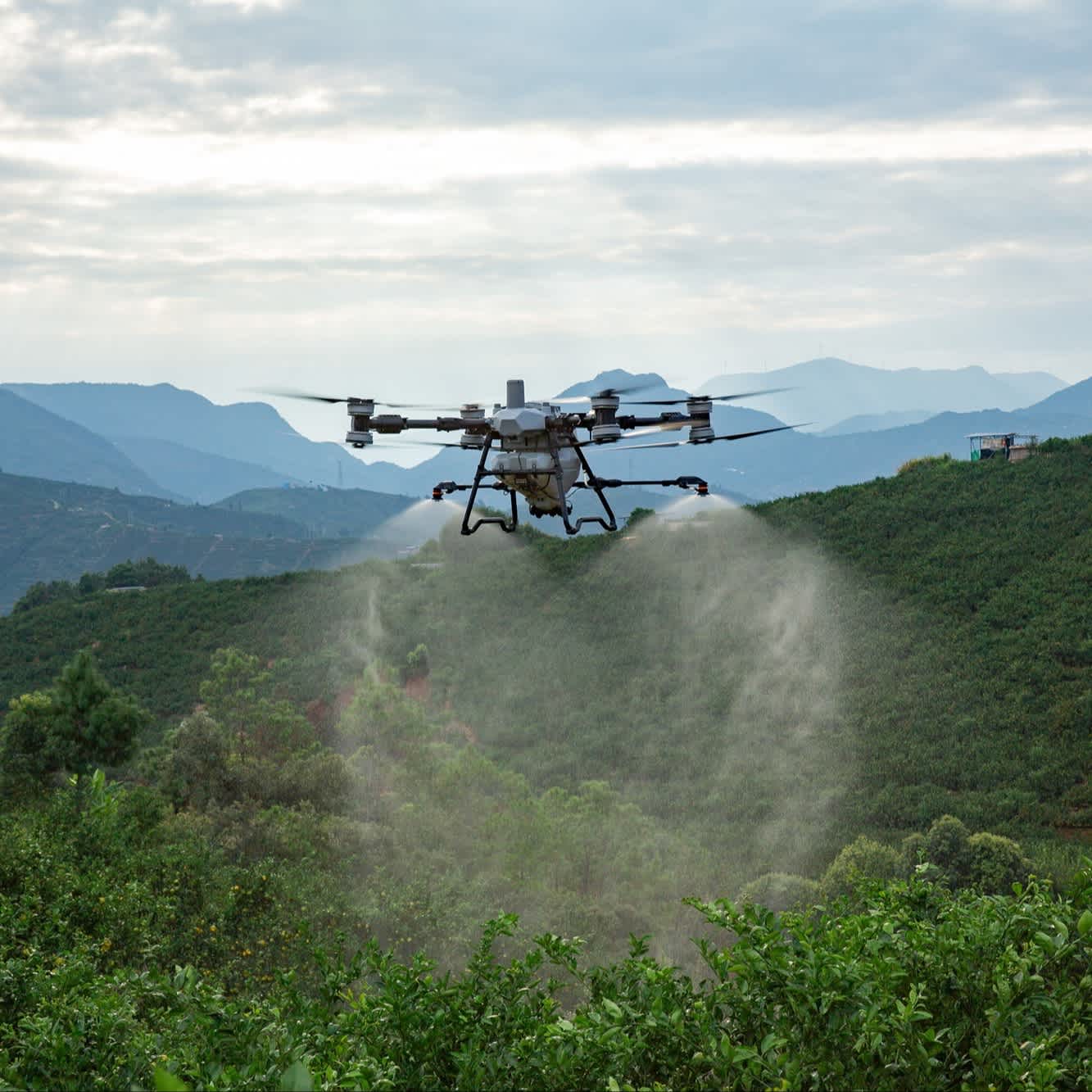
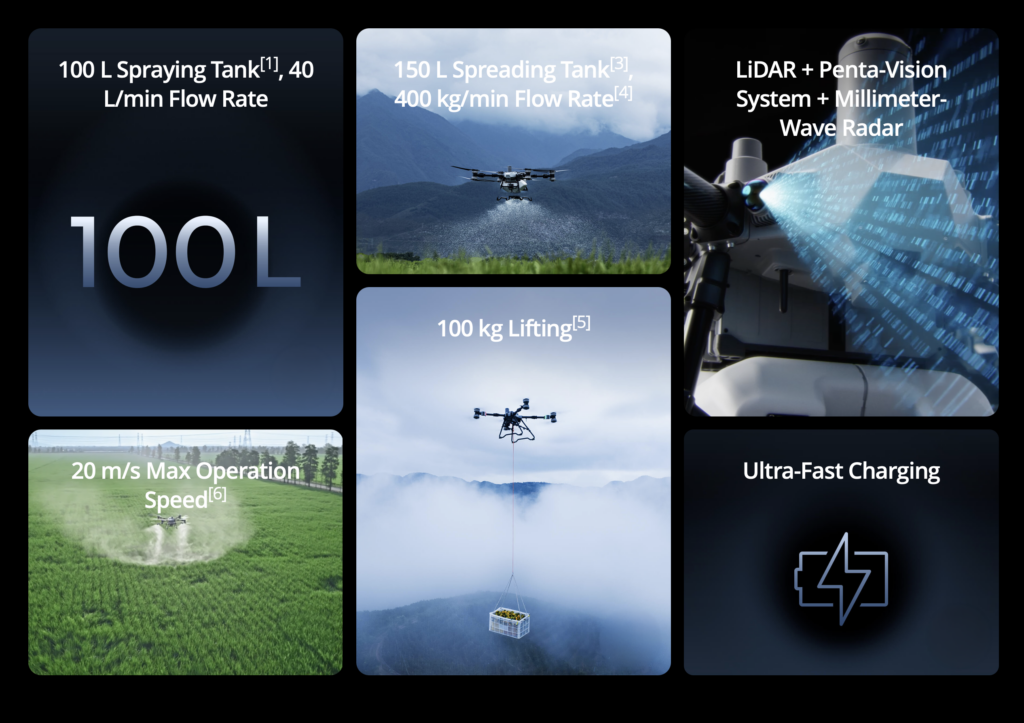
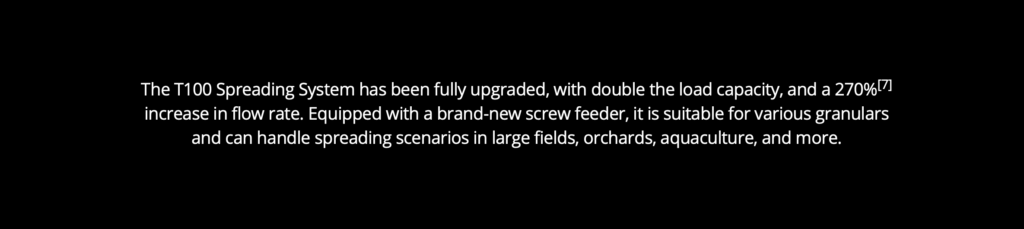
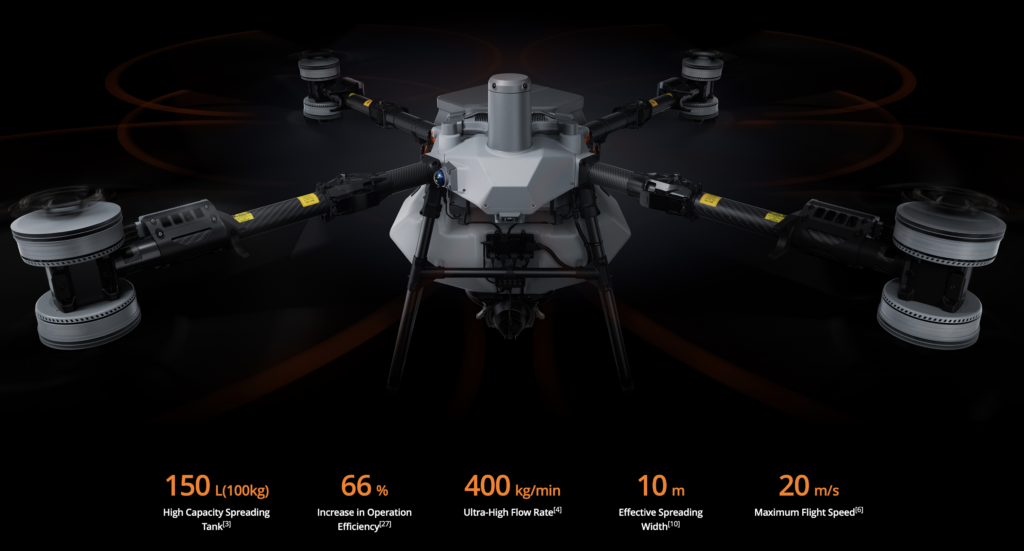
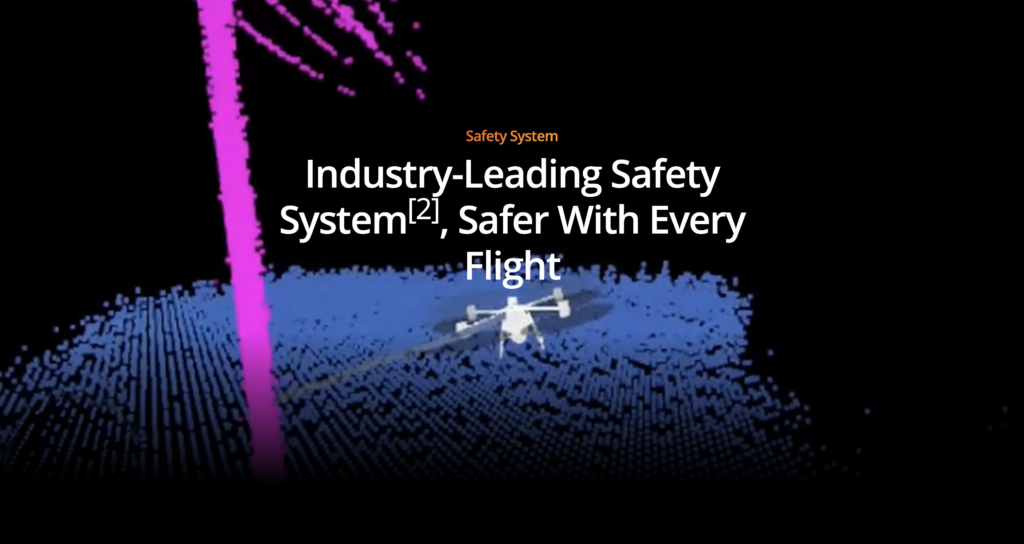
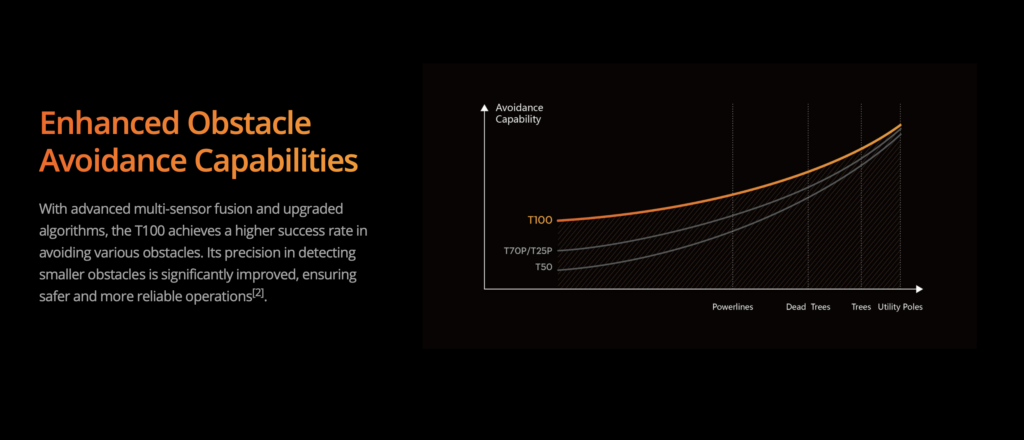
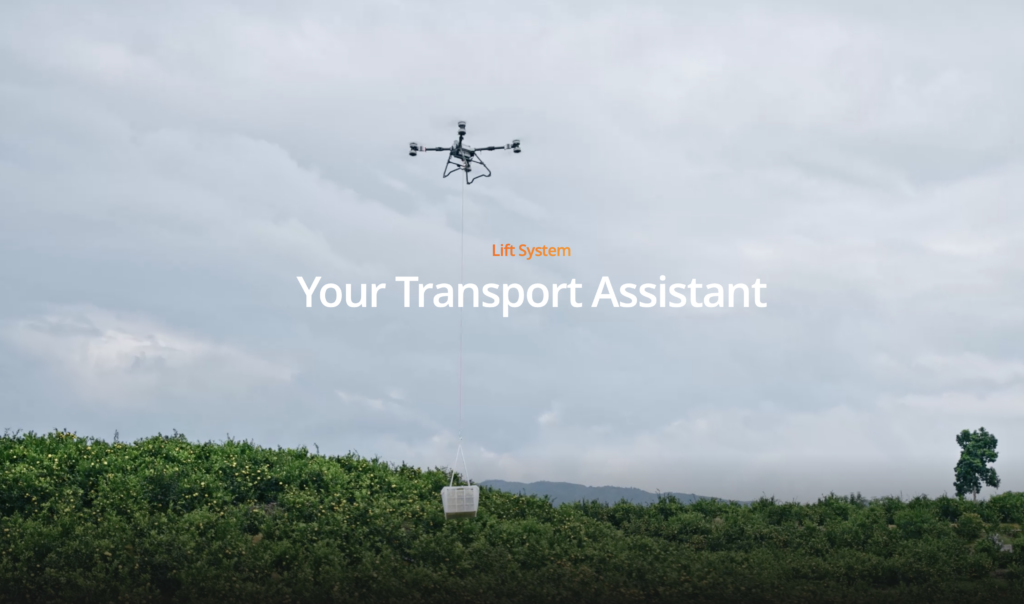
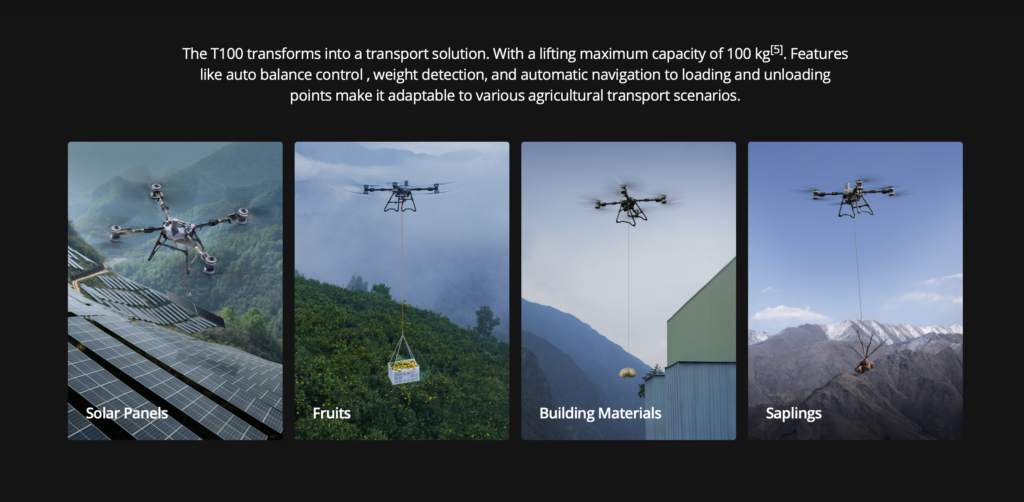
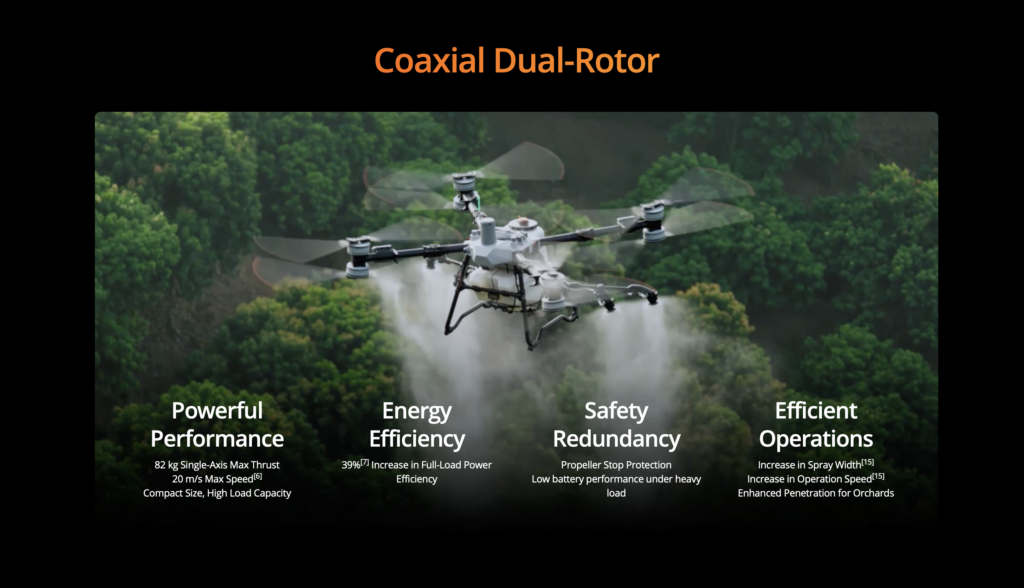
The T100 Agricultural Drone, a groundbreaking creation twelve years in the making, boasts a maximum payload of 100 kg. Its operational efficiency is doubled, supporting multiple application scenarios, including spraying, spreading, and lifting tasks. Featuring industry-leading safety systems and advanced algorithms, it delivers unparalleled safety performance and an intelligent operational experience.
Specifications:
Aircraft
-
Weight
-
Weight for spraying: 75 kg (standard with 2 nozzles)
-
Weight for spraying: 77 kg (optional with 4 nozzles)
-
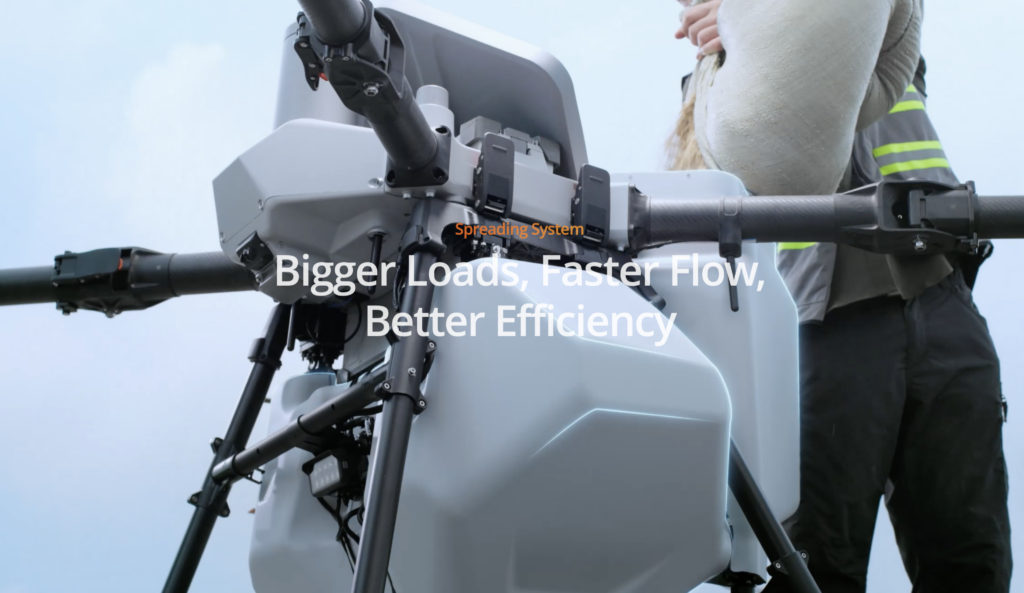
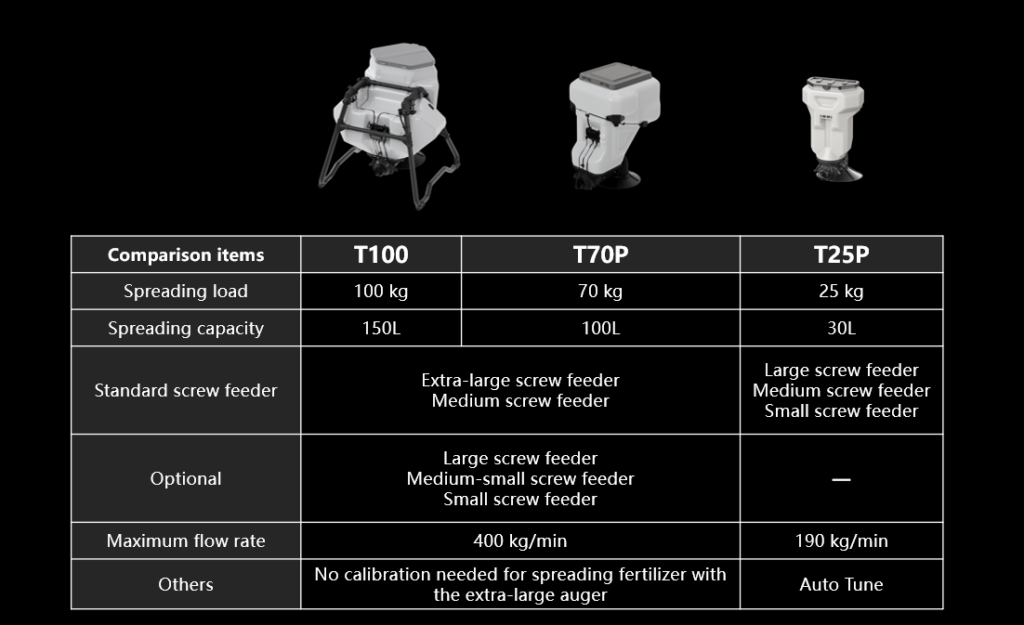
Weight for spreading: 75 kg (equipped with spreading system)
-
Weight for lifting: 65 kg (equipped with lifting system)
-
Weight for lifting: 90 kg (equipped with dual-battery lifting system)
-
-
Max Takeoff Weight[1]
-
Max takeoff weight for spraying: 175 kg (standard with 2 nozzles)
-
Max takeoff weight for spraying: 177 kg (optional with 4 nozzles)
-
Max takeoff weight for spreading: 175 kg (equipped with spreading system)
-
Max takeoff weight for lifting: 165 kg (equipped with lifting system)
-
Max takeoff weight for lifting: 170 kg (equipped with dual-battery lifting system)
-
-
Max Diagonal Wheelbase
-
2330 mm (diagonal)
-
-
Dimensions
-
3220 mm × 3224 mm × 975 mm(arms and propellers unfolded)
-
1820 mm × 1840 mm × 975 mm(arms unfolded and propellers folded)
-
1105 mm × 1265 mm × 975 mm(arms and propellers folded)
-
-
Hovering Accuracy Range (with strong GNSS signal)
-
RTK Enabled:
±10 cm (horizontal), ±10 cm (vertical) -
RTK not enabled:
Horizontal ± 0.6 m, vertical ± 0.3 m
-
-
Max Configurable Flight Radius
-
2 km
-
-
Operating Temperature
-
0 °C to 40 °C
-
-
Max Wind Resistance
-
<6 m/s
-
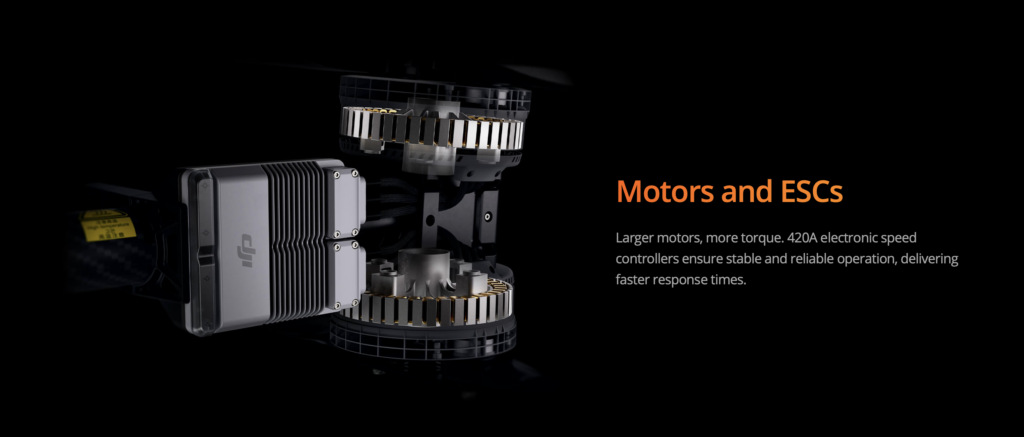
Propulsion System – Motors
-
Stator Size
-
155 × 16 mm
-
-
KV
-
60 rpm/V
-
Propulsion System – Propellers
-
Material
-
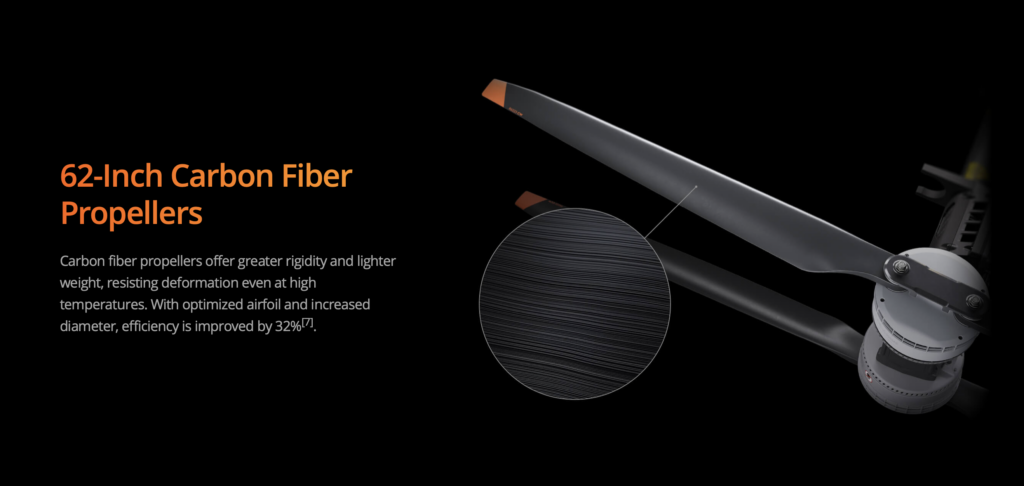
Carbon Fiber Composite
-
-
Dimensions
-
62 inches
-
-
Quantity
-
8 pairs
-
Spraying System
-
Model
-
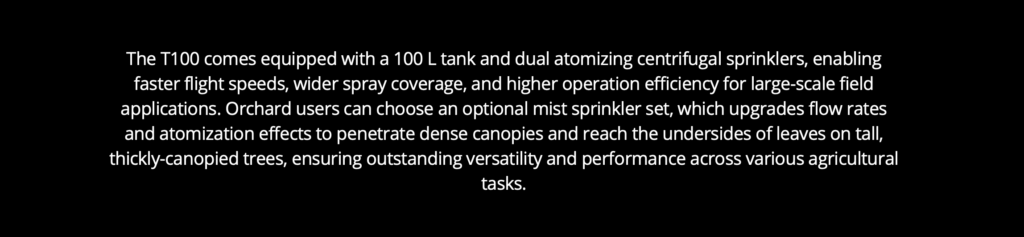
LS100
-
-
Dimensions
-
880 mm × 870 mm × 810 mm (spray rod folded)
-
1020 mm × 1930 mm × 810 mm (spray rod unfolded)
-
Spraying System – Sprinklers
-
Model
-
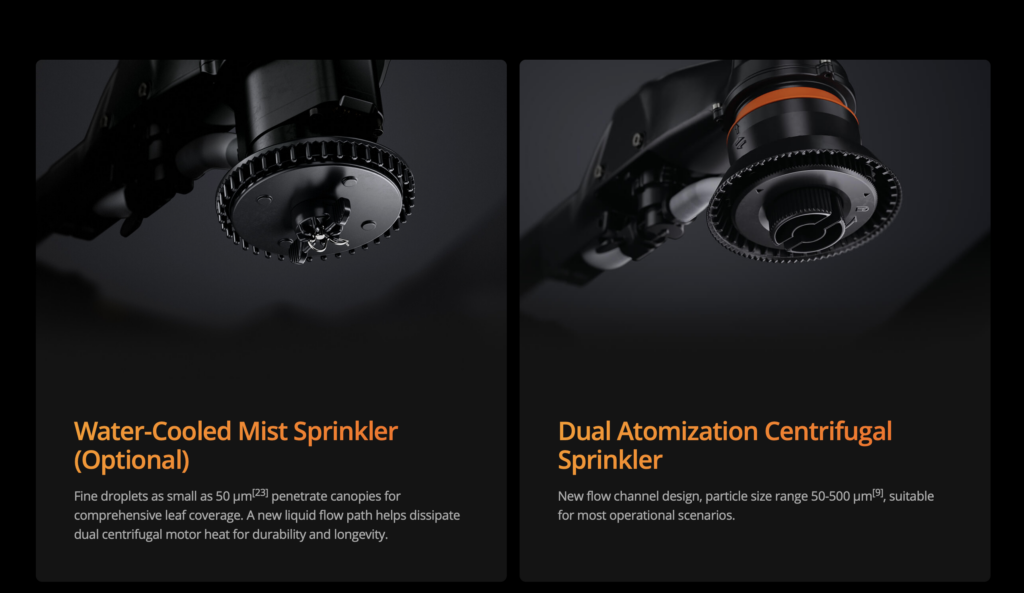
LX07550SX (Standard Nozzle) / LX09550SX (Optional Mist Nozzle)
-
-
Quantity
-
2 (Standard) / 4 (Optional)
-
-
Nozzle Distance
-
1834 mm (Two Nozzles / Four Nozzles Outermost)
-
-
Droplet Size
-
50 – 500 μm
-
-
Effective Spray Width[2]
-
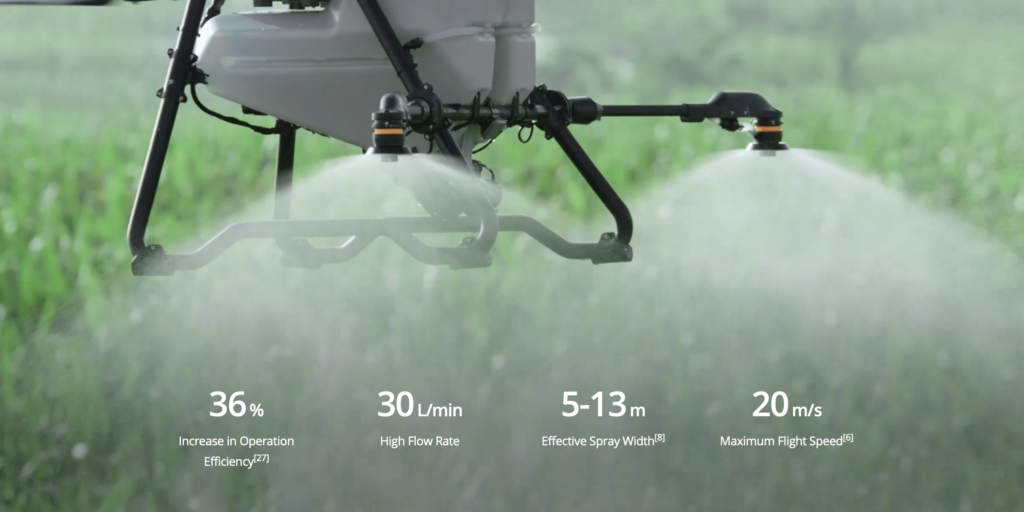
5 – 13 m
-
Spraying system – Delivery Pumps
-
Type
-
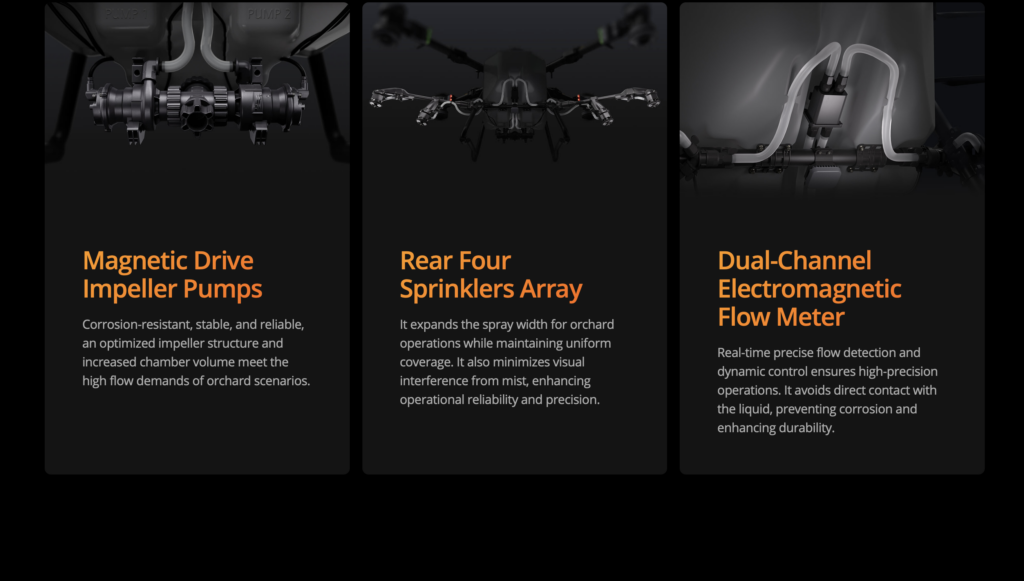
Impeller Pump (Magnetic Drive)
-
-
Quantity
-
2
-
-
Max Flow Rate
-
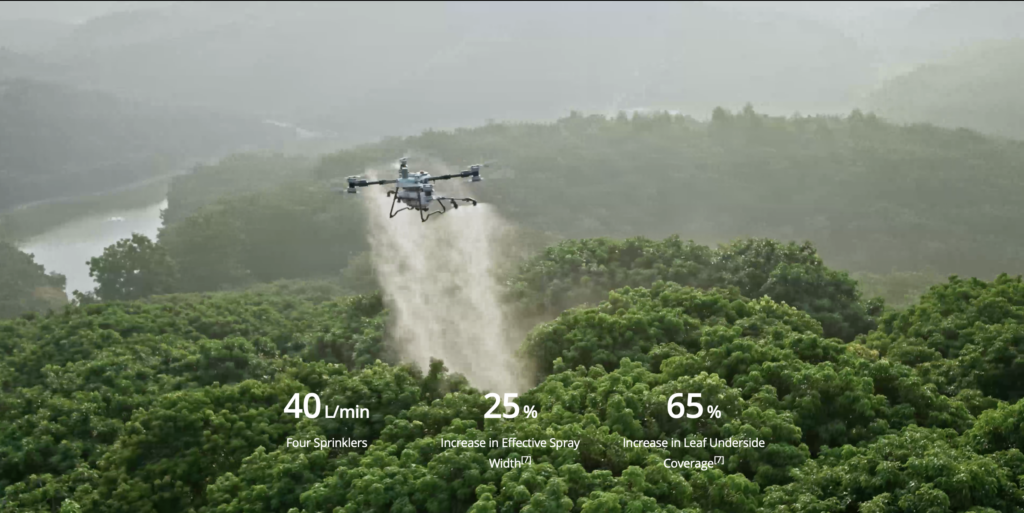
30 L/min (Standard 2 nozzles), 40 L/min (Optional 4 nozzles)
-
Safety System 3.0
-
Millimeter wave radar EIRP
-
< 20 dBm (NCC / MIC / KC / CE / FCC)
-
-
Operating Temperature
-
0 °C to 40 °C
-
-
Operating environment requirements
-
Adequate light and discernible surroundings
-
-
Field of View (FOV)
-
Laser radar: Vertical 272°, Horizontal 60°
-
Front Radar: Horizontal 360°, Vertical ± 45°
-
Downward Radar: Left and Right ± 12.5°, Front and Back ± 22.5°
-
Rear Radar: Left and Right ± 45°, Front and Back ± 45°
-
Quad vision system: Horizontal 360°, Vertical 180°
-
FPV camera: Horizontal ± 86°, Vertical 108°
-
-
Measurement range[4]
-
≤ 60 m
-
-
Effective safe obstacle avoidance speed[5]
-
≤ 13.8 m/s
-
-
Effective Obstacle Avoidance Height
-
≥ 1.5 m
-
-
Safe Distance
-
2.5m (Distance between the drone and obstacle after braking and stable hovering)
-
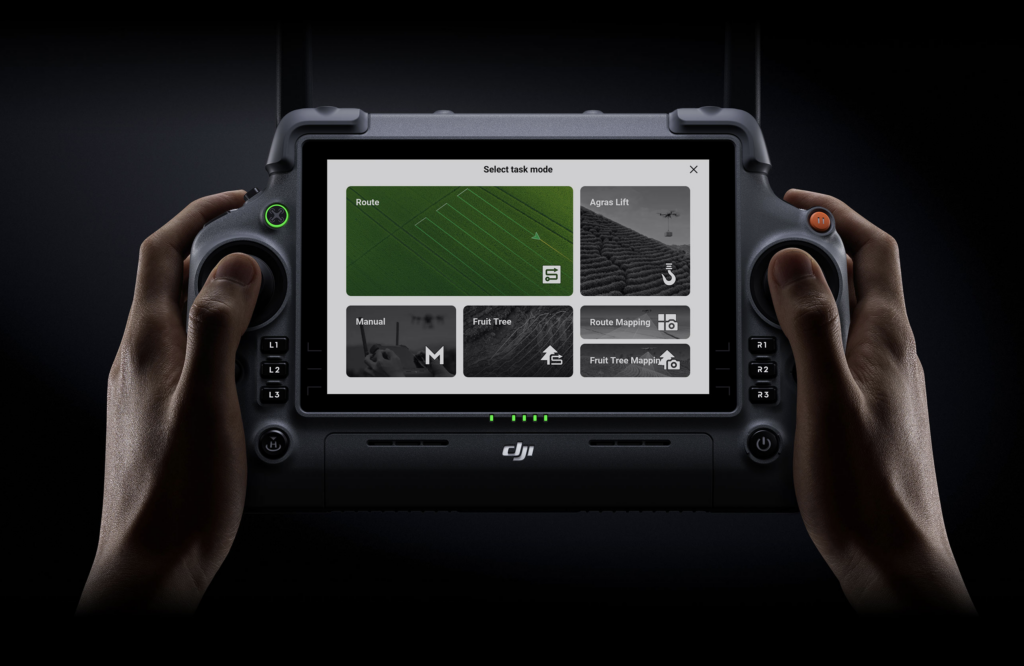
Remote Controller
-
Model
-
TKPL 2
-
-
Screen
-
7-inch LCD touchscreen; resolution: 1920 × 1200; brightness: 1400 cd/m²
-
-
Storage Temperature Range
-
Less than one month: -30° to 45° C (-22° to 113° F)
-
One to three months: -30° to 35° C (-22° to 95° F)
-
Three months to one year: -30° to 30° C (-22° to 86° F)
-
-
Charging Temperature
-
5° to 40° C (41° to 104° F)
-
-
Internal Battery Runtime
-
3.8 hours
-
-
External Battery Runtime
-
3.2 hours
-
-
Charging Type
-
Use a USB-C fast charger with a maximum power of 65 W (maximum voltage 20 V), and it is recommended to use the DJI Portable Charger.
-
-
Charging Time
-
2 hours for internal battery or internal and external battery (when remote controller is powered off and using a standard DJI charger)
-
Footnotes
-
Measured at sea level, the DJI Agriculture App will intelligently recommend the loading weight based on the current aircraft status, environmental conditions, and operational tasks. Users should not exceed the recommended maximum loading weight, as it may affect flight safety. When using in Australia, please follow local regulations and keep the maximum takeoff weight at 149.9kg.
-
The effective spray width of the spraying system depends on the actual working scene.
-
Working height is 3 m, disc rotation speed is 1100 rpm, uniformity requirement (CV<30%) measured broadcast width is 10 m. The faster the disc rotation speed, the higher the flight altitude, the larger the broadcast width.
-
Includes the weight of ropes and hooks. Measured at sea level, the DJI Agriculture App will intelligently recommend the loading weight based on the current state of the aircraft, environmental conditions, and operational tasks. The maximum weight of the loaded material should not exceed the recommended value, as it may affect flight safety.
-
The effective working range of sensing distance, obstacle avoidance, and bypassing capabilities may vary due to different environmental lighting, rain, fog, and the material, location, and shape of the subject object. The downward sensing is used to assist in terrain-following altitude flight, while sensing in other directions is used for obstacle avoidance. Except for scenes without linear obstacles, if a collision occurs at speeds up to 13.8 m/s resulting in aircraft damage, responsibility can be determined through log analysis, and the aircraft may be eligible for free warranty if non-human causes are identified. If there are linear obstacles like wires or guy wires on power poles, please mark them as obstacles; otherwise, failure to bypass them will be the customer’s responsibility.
Note:1. The downward perception is used to assist terrain-following altitude flight. If a collision with an obstacle occurs below, it is considered the customer’s responsibility.2. Due to the performance limitations of the safety system, the aircraft cannot actively avoid moving objects. Accidents in such scenes are considered the customer’s responsibility. -
Sea level height, environmental temperature between 15-40 degrees Celsius, time to charge the battery from 30% to 95%; fast charging is supported when the battery cell temperature is within the range of 15-75 degrees Celsius; charging time varies depending on input power, ASL, initial charge level, and other factors.
-
Positioning accuracy and reliability are affected by various factors, including equipment tilt, signal obstruction, multipath, number of satellites, geometric distribution, and atmospheric conditions. It is recommended to set up the equipment in open scenes, away from electromagnetic interference and multipath environments.